
For years, the story of African tech was told in fragments. A startup here, a funding round there. But something bigger has been happening across the continent, quietly and then all at once. Cities are building entire ecosystems: talent pipelines, accelerators, regulatory frameworks, and the kind of deal flow that makes global investors pay attention. These are not just cities with good ideas. They are cities actively competing for a seat at the world’s technology table.
Here are seven of them.
7. Kigali, Rwanda
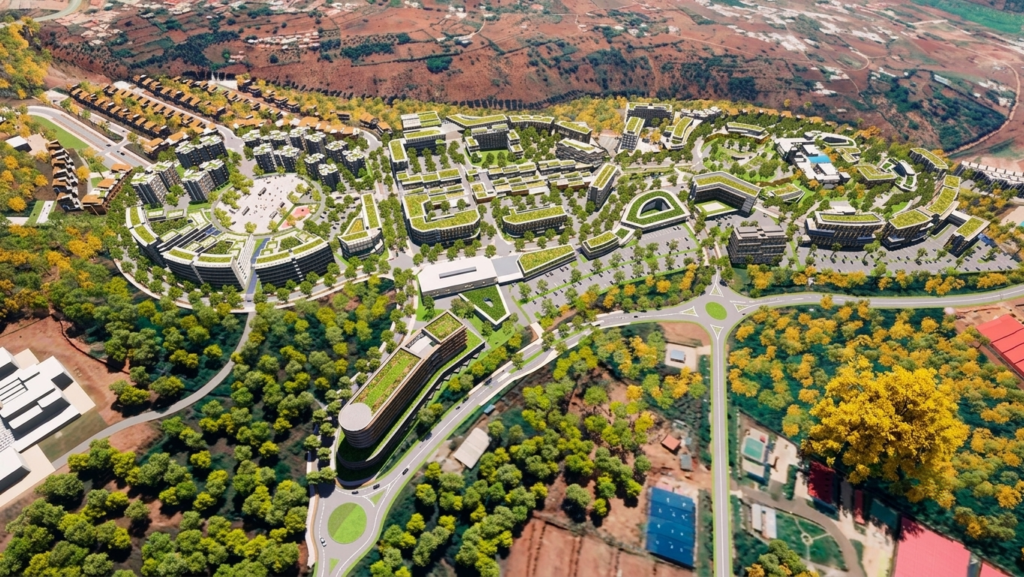
Rwanda’s story is almost counterintuitive. A landlocked country of roughly 14 million people, with no coastline and no oil, is building what may be Africa’s most deliberately engineered tech ecosystem. The government decided that knowledge and technology would be the economy. So it built the infrastructure to match that decision.
At the center of this vision is Kigali Innovation City (KIC), a $300 million mixed-use smart city development spanning 61 hectares in a Special Economic Zone. Groundbreaking happened in September 2024. The project is a joint venture between pan-African infrastructure investment firm Africa50 and the Rwanda Development Board, and it is designed to house universities, research centers, office spaces, startup incubators, and residential units in a single ecosystem. Carnegie Mellon University Africa and the African Leadership University are already operating within KIC. The University of Rwanda’s Centre of Biomedical Engineering and eHealth is under development there too.
The projected outcomes are ambitious: 50,000 new jobs, $150 million in annual ICT exports, and a steady pipeline of over 2,600 tech graduates per year. Rwanda already has 95 percent 4G coverage across the country, with 5G coming. The government offers entrepreneur visas, free co-working spaces, and a policy environment deliberately designed to attract founders from across the continent. The main challenge right now is talent retention. Kigali graduates a lot of engineers, and some of the best ones leave for Nairobi’s higher salaries. But Rwanda is betting that as the ecosystem matures and wages rise, that dynamic will reverse. It is a bet worth watching.
6. Accra, Ghana
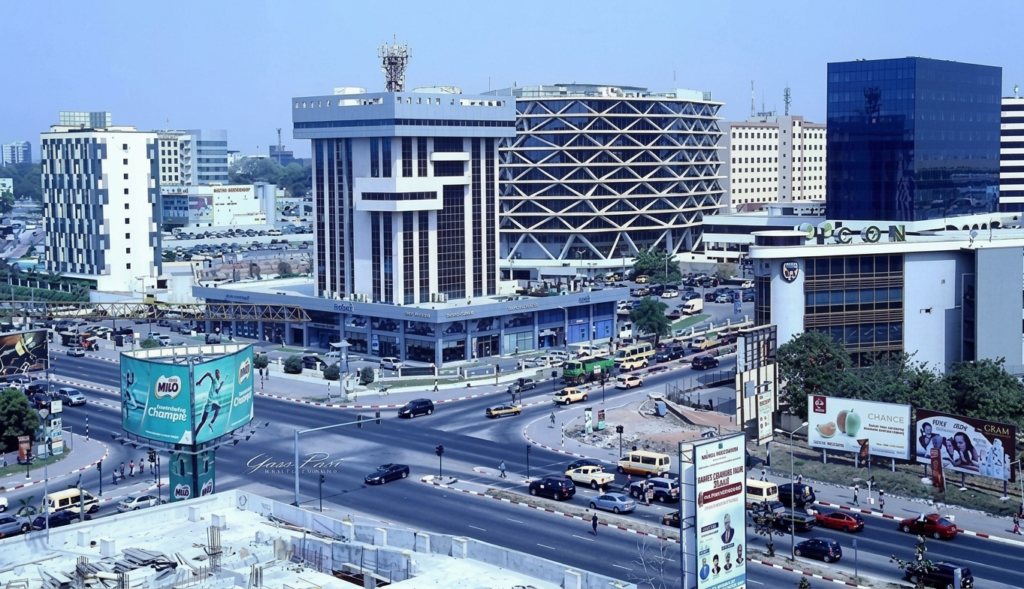
Accra has quietly become one of West Africa’s most consequential tech cities, and 2024 made that case impossible to ignore. Ghanaian startups raised $450 million that year, a 65 percent jump from the previous year, according to stats and market insights data. The country’s startup ecosystem grew nearly 95 percent in total investment in a single year, bringing its estimated market value to $2.6 billion. Those are not small-market numbers.
The city’s tech community is supported by more than 120 hubs, incubators, and accelerators spread across Ghana, with the highest concentration in Accra. MEST Africa, a Pan-African accelerator and seed fund headquartered in Accra, has supported dozens of tech companies. Impact Hub Accra, part of a global social innovation network, and the government-backed Ghana Innovation Hub are among the other key institutions.
What really put Accra on the global tech map, though, was Google. In 2018, the company chose the city as the home of its first AI research center on the African continent. Google AI Ghana has since become a symbol of the kind of institutional vote of confidence that changes a city’s trajectory. Microsoft, IBM, and Meta have all followed with programs and partnerships of their own.
Then, in late 2025, Ghana signed a $1 billion deal with the UAE to build Africa’s largest AI and innovation hub in Ningo-Prampram in the Greater Accra Region. The UAE will finance and oversee the development, with approximately $400 million going directly into AI infrastructure, including a $180 million AI Compute Hub powered by renewable energy. A further $75 million will fund a Ghana-UAE AI and Web3 campus supported by the Dubai Future Foundation. For a city that has spent years quietly building momentum, that is a very loud arrival.
5. Cairo, Egypt
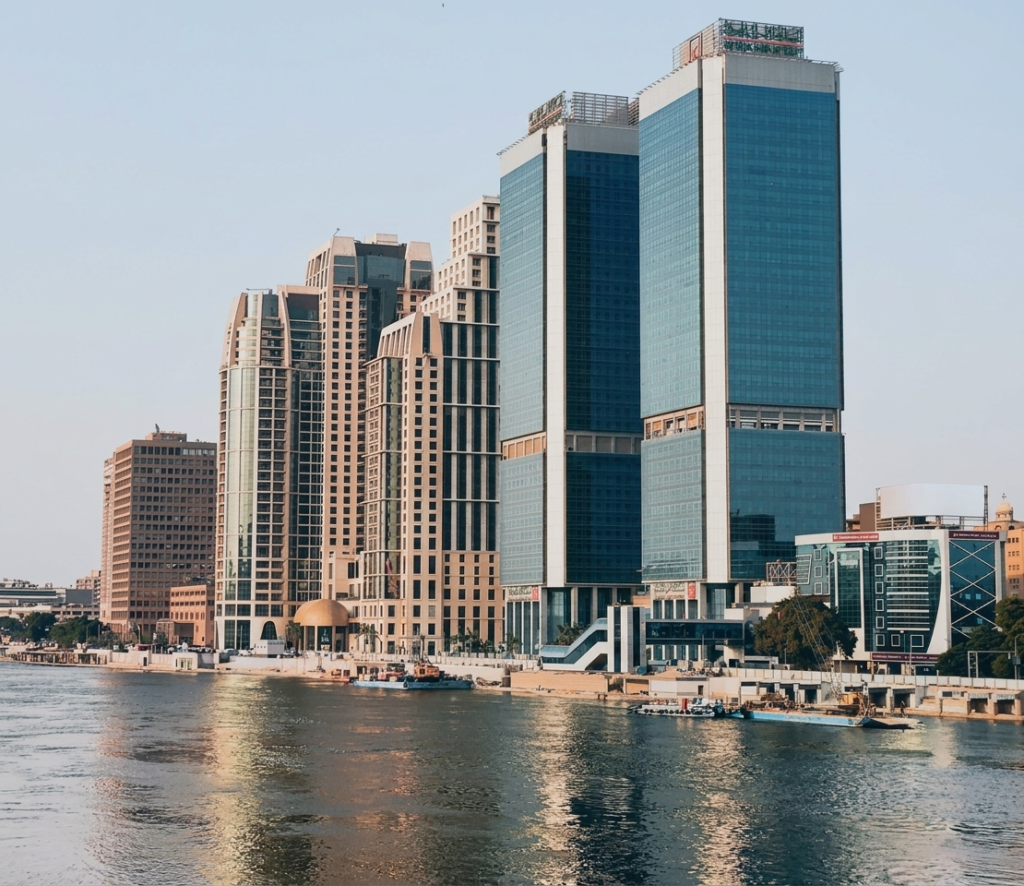
Cairo operates at a scale that most African tech cities cannot match. With a metropolitan population of over 20 million people and a youth bulge that has produced one of the region’s most technically literate workforces, the city has the raw material for a serious tech hub. The question has always been about structure and capital. That has been changing rapidly.
The foundational institution in Cairo’s startup ecosystem is Flat6Labs, launched in 2011 by Sawari Ventures and now one of the most active accelerators on the continent, having invested over $85 million across more than 2,000 entrepreneurs. From its early cycles came companies like Instabug, a mobile app debugging platform used by Samsung, PayPal, Lyft, and Airbnb, and Moneyfellows, a digital take on traditional money-saving circles that raised $31 million in Series B funding. Algebra Ventures, Sawari Ventures, and Disruptech have also been active investors in the ecosystem.
Egypt’s first unicorn, Fawry, a digital payments platform, reached a billion-dollar valuation and listed on the Egyptian Stock Exchange. Swvl, a mass transit technology company, was the first Egyptian startup to list on the Nasdaq, doing so in March 2022 through a SPAC deal. MNT-Halan, a fintech company serving underbanked populations, is the country’s most recent unicorn addition. Egypt’s tech sector grew 16.3 percent in 2022/2023, making it the country’s fastest-growing sector for the fifth consecutive year. Cairo is not just building startups. It is building a track record.
4. Cape Town, South Africa

Cape Town has carved out a very specific identity in the African tech landscape: Africa’s fintech capital. According to the 2023 Disrupt Africa Fintech Report, 45 percent of all South African fintech startups are headquartered in the city. That concentration is not an accident. It is the result of decades of financial services expertise, a regulatory environment that has been more willing to engage with innovation than most, and a talent pipeline that the Western Cape alone accounts for over 35 percent of South Africa’s IT graduates annually.
The companies that have emerged from Cape Town tell the story clearly. Yoco, which provides card payment infrastructure for small businesses, has processed billions of rands in transactions and expanded across Southern Africa. Jumo, a fintech platform using machine learning to provide financial services in emerging markets, has raised over $200 million in funding. Luno, a cryptocurrency exchange, grew from Cape Town and was acquired by Digital Currency Group. HAVAÍC, one of the city’s most active VC firms, completed a $25 million second close of its African Innovation Fund 3 in 2025, backed by institutional investors including Sanlam Multi-Manager.
Corporate venture capital activity in Cape Town has also grown significantly. A 2024 Catalyst Fund analysis showed that CVC participation in local funding rounds grew over 80 percent since 2021. Amazon, Naspers, and Takealot are among the multinationals increasingly investing in local startups. For international companies looking to access African markets through a globally legible, talent-rich, regulation-friendly environment, Cape Town remains one of the most attractive entry points on the continent.
3. Johannesburg, South Africa
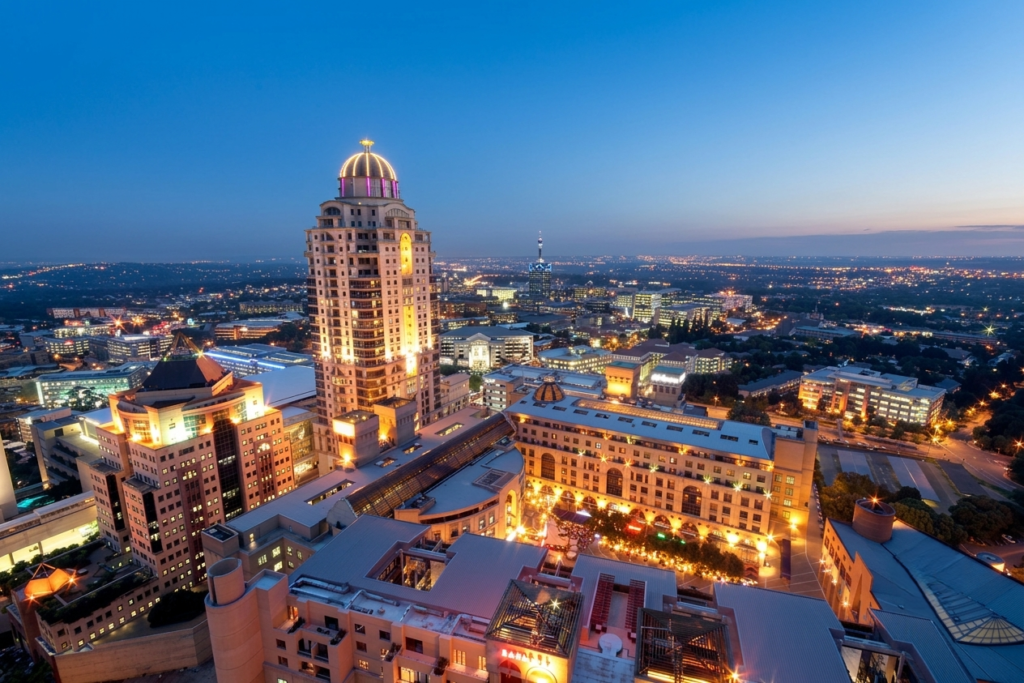
If Cape Town is Africa’s fintech laboratory, Johannesburg is its financial engine. The city is home to the Johannesburg Stock Exchange, the largest stock exchange on the African continent and among the top 20 globally by market capitalization. Africa’s biggest banks, including Standard Bank, FirstRand, Absa, and Nedbank, all have their headquarters here. That concentration of institutional financial power has created a uniquely fertile ground for fintech and financial technology companies that need established partners and regulatory experience to scale.
The Global Startup Ecosystem Report 2024 ranked Johannesburg first in knowledge and third in talent and experience among African startup ecosystems. That ranking reflects the city’s deep human capital base. Johannesburg’s universities, including Wits, the University of Johannesburg, and the University of Pretoria, produce thousands of engineering, finance, and computer science graduates annually. The 22 On Sloane campus in Sandton, described as Africa’s largest entrepreneurship campus, provides co-working, incubation, and acceleration programs under one roof.
Naspers, one of the world’s largest technology investment companies by market cap, built its empire from South Africa. Through its subsidiary Prosus, it holds stakes in companies like Tencent, delivery operator iFood, and dozens of global tech investments. That history has given Johannesburg’s startup community a particular understanding of what global-scale tech companies look like from the inside, and what it takes to build them. The city’s challenge has been converting that knowledge capital into a thriving startup founder culture at the grassroots level, but the infrastructure is there, and it is growing.
2. Nairobi, Kenya
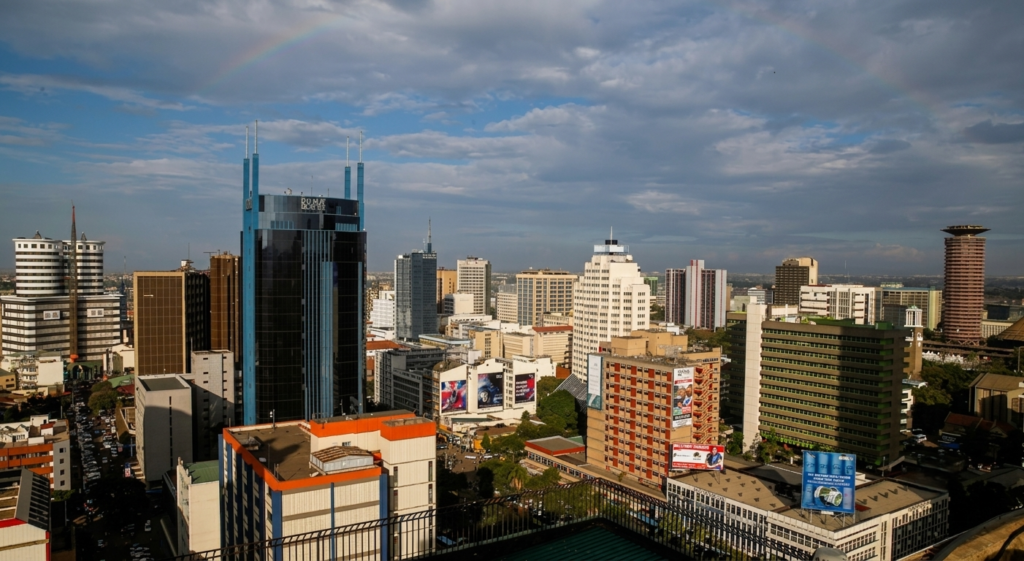
Nairobi did not become the Silicon Savannah by accident or by government decree. It became the Silicon Savannah because in 2007, Safaricom launched M-Pesa, a mobile money transfer service that turned basic feature phones into bank accounts, and the world could not look away. That single product established a proof of concept that rippled through every sector: if you could move money on a phone in Nairobi, you could do almost anything on a phone in Nairobi.
The city now attracts over 60 percent of East Africa’s venture capital. In 2024 alone, Nairobi-based companies raised over $800 million in venture capital. Kenya attracted the most startup funding on the continent from January to October 2024, grabbing 31 percent of all funding across Africa during that period. M-Pesa itself now serves over 35 million active users monthly, handling 100 million transactions daily, and processed more than $310 billion in transactions across eight countries in fiscal year 2024.
Microsoft expanded its Africa Development Center in Nairobi in 2024, specifically focused on AI and cloud computing. Google opened an AI research center in the city in 2023, focused on AI solutions for African languages and agricultural applications. Amazon Web Services has launched specialized programs for Nairobi’s growing tech talent pool. The innovation hub iHub, which helped launch companies like Ushahidi (a crisis mapping nonprofit now used globally), remains a community cornerstone. Companies like Twiga Foods, Tala, and Africa’s Talking have built from Nairobi into pan-African and global operations. Kenya’s government passed a Startup Act in 2022 offering tax incentives and easier regulations. The tech sector now contributes 1.1 percent of Kenya’s GDP and is projected to grow further. Konza Technopolis, the government’s smart city project outside Nairobi, is expected to create 200,000 jobs by 2030.
1. Lagos, Nigeria
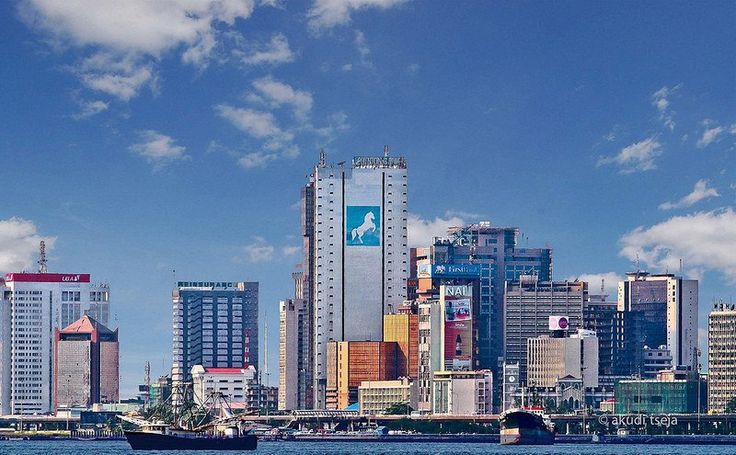
In 2025, the Dealroom Global Tech Ecosystem Index ranked Lagos as the number one fastest-growing tech city in the world. Not in Africa. In the world. It beat Istanbul, Mumbai, Belo Horizonte, and every other emerging market city on the planet. That ranking is the culmination of about a decade of compounding momentum in a city that built its tech sector not from government blueprints, but from founders solving real problems in one of the world’s most chaotic and commercially vibrant environments.
The numbers behind Lagos are extraordinary. The city’s tech ecosystem has seen an 11.6-fold increase in startup enterprise value since 2017, reaching a total ecosystem valuation of $15.3 billion. Between 2019 and 2024, Lagos attracted over $6 billion in direct foreign tech investment. The city is home to five unicorns: Interswitch, Flutterwave, Jumia, OPay, and Moniepoint. The rate of unicorn creation has tripled since 2019. Moniepoint achieved its unicorn status in October 2024 after raising $110 million in a Series C round, with Visa joining as an investor in January 2025.
The Yaba district, known as “Yabacon Valley” or “Silicon Lagoon,” is where a lot of this started. The Co-Creation Hub (CcHUB) opened there in 2010 and helped incubate companies like Andela, which became a unicorn by training African software engineers and placing them with global companies. Paystack, the payments company founded in Lagos, was acquired by Stripe for $200 million, one of Africa’s most significant tech exits. Flutterwave, valued at $3 billion, processes payments across 34 countries. OPay has brought financial services to millions of previously unbanked Nigerians. From January to May 2025, Nigerian startups raised over $1 billion in funding, a 40 percent increase compared to the prior year.
None of this happened in a city with reliable electricity or easy infrastructure. Lagos builds despite, and sometimes because of, the friction. That is perhaps the most important thing about it. The problems are enormous, the market is enormous, and the talent is enormous. Put all three together, and you get what the world just officially confirmed: the fastest-growing tech city on Earth.