YECOSA 2006 SET AT 20: Celebrating Two Decades of Memories, Growth, Friendship and a Shared Future
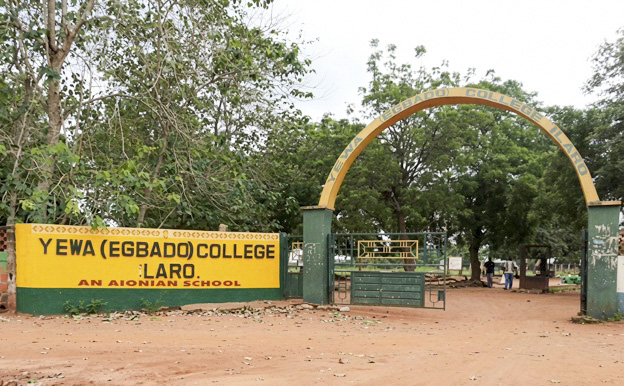
Twenty years can change almost everything – except the memories that shaped us. In 2006, a group of young students walked through the gates of Yewa College, Ilaro, carrying dreams of what the future might hold. Two decades later, those students have grown into professionals, entrepreneurs, business owners, community leaders, parents and accomplished individuals contributing in different ways across Nigeria and beyond. Now, the YECOSA 2006 Set is coming together once again to celebrate that remarkable journey. On Saturday, 14th November 2026, in Lagos, Nigeria, members of the set will gather for their 20th Anniversary Reunion, a milestone celebration built around friendship, reflection, achievement, reconnection and the enduring bonds created during their secondary school years. More Than a Reunion This celebration is not simply about looking back. It is an opportunity to acknowledge how far the members of the class have come, celebrate the different paths they have taken, and create new opportunities for connection and collaboration. Over the past twenty years, members of the set have established themselves in diverse fields and locations. Some are based in Nigeria, while others now live and work across different parts of the world. Their collective experience represents a broad network of professionals, entrepreneurs, innovators and individuals making an impact in their respective spheres. The reunion therefore provides a unique opportunity to bring this network together in one place not only to reminisce about the past, but also to explore the possibilities that the future holds. Beyond the Reunion – A Legacy Project As part of our 20th anniversary celebrations, the YECOSA (YCI) 06 SET went beyond the party, we gave back. In August 2026, we completed and commissioned a total rehabilitation of a junior school toilet facility at Yewa College, Ilaro, fully funded by members of our set. The project covered plumbing, carpentry, painting, and masonry works, and was formally handed over to the school ahead of our reunion. Twenty years out, we are still building. A Celebration of Memories At the heart of the reunion is the simple joy of coming home to familiar faces. The classmates who once shared classrooms, school activities, friendships, challenges and youthful ambitions will have an opportunity to reconnect after twenty years. The programme is being designed to capture both the nostalgia of the past and the achievements of the present, with activities focused on networking, entertainment, recognition, storytelling and the preservation of memories. A special video compilation is also being developed, featuring members of the set sharing brief reflections on their twenty-year journey. The collection will serve as a lasting record of where the class came from, how far its members have travelled and what the YECOSA experience has meant to them. A Network With Potential One of the most exciting aspects of the anniversary is the strength and diversity of the network that has emerged over the past two decades. The YECOSA 2006 Set brings together people with experience across different professional and business sectors, creating opportunities for meaningful conversations, collaborations and relationships that can extend well beyond the reunion itself. For businesses, organizations and brands seeking to connect with an educated, diverse and professionally established audience, the anniversary presents an opportunity to engage with a community whose members have influence in different sectors and geographical locations. This is where the reunion can become more than a one-day event. It can become a platform for visibility, networking, collaboration and shared value. An Open Invitation to Partners The organizers recognize that meaningful events are strengthened when individuals, organizations and businesses come together around a shared vision. As preparations continue, the committee welcomes conversations with corporate organizations, private businesses, institutions, entrepreneurs, media organizations and individuals who may wish to support, partner with or contribute value to the anniversary. Partnership opportunities may include event sponsorship, brand visibility, media collaboration, product or service support, professional engagement and other mutually beneficial initiatives. For prospective partners, the opportunity is not simply about attaching a name to an event. It is about connecting with a growing network of professionals and individuals whose stories, careers and businesses extend across different communities and countries. The committee is open to exploring creative partnerships that deliver meaningful value to both the anniversary and participating organizations. Looking Back. Celebrating Today. Building Tomorrow. Twenty years ago, the members of YECOSA 2006 shared a beginning. Today, they share twenty years of stories. Some stories are about achievement. Some are about perseverance. Some are about unexpected journeys. And some are simply about friendships that survived the passage of time. The 20th Anniversary Reunion is an opportunity to bring all those stories into one room. It is a celebration of where the journey began, where it has led, and what can still be achieved together. Twenty years. One class. Countless stories. One unforgettable reunion. Event Details Event: YECOSA 2006 Set – 20th Anniversary Reunion Date: Saturday, 14th November 2026 Location: Lagos, Nigeria Theme: 20 Years of Memories, Friendship & Growth YECOSA 2006 SET One Class. One Family. One Legacy. For partnership, sponsorship and collaboration opportunities, interested organizations and individuals are invited to connect with the Reunion Committee. Send us an email at yewacollegeilaro06@gmail.com Anniversary Committee Oluyemi Itulola Olalekan Olaniyan
What Nobody Is Telling You About South Africa’s Xenophobia Crisis

There is a particular kind of grief that comes from being burned by your own family. Not a stranger. Not a colonizer. A brother whose freedom you once bled for. That is the emotion sitting underneath every video of a Malawian shack set alight in Mossel Bay, every Nigerian shopkeeper chased from Diepsloot, every Zimbabwean man beaten in the street for failing to produce a passport fast enough. Since April 2026, South Africa has watched a new wave of Afrophobic violence sweep through Johannesburg, Pretoria, Durban and the Western Cape, leaving at least ten foreign nationals dead, thousands displaced, and diplomatic missions from Malawi, Mozambique, Ghana, Nigeria and Kenya scrambling to evacuate their citizens. Movements like Operation Dudula and March and March have set deportation deadlines, organized door to door “visa checks,” and turned township frustration into a national spectacle. But the story the world is being fed, on both sides, is a lie of omission. One camp insists South Africans have simply become hateful, ungrateful for the sacrifices other nations made during apartheid. The other insists foreigners are quietly strangling the South African economy, stealing jobs and housing meant for citizens. Both narratives are seductive. Both are incomplete. And the gap between what is said and what is true is precisely where this crisis festers. It is time to close that gap. The Inheritance Nobody Chose: Apartheid’s Unfinished Business To understand the rage driving men in Zulu warrior regalia to march through Springs and Pietermaritzburg, you have to sit with a number that should stop any conversation cold: 32.7 percent. That is South Africa’s official unemployment rate as of the first quarter of 2026, according to Statistics South Africa, up from 31.4 percent the previous quarter, with more than 8.1 million people out of work. Among the youth, the figure climbs past 45 percent. Broader measures of labor underutilization, which count discouraged workers who have given up searching altogether, sit above 46 percent. This is not a recession statistic. This is a structural condition that has held above 30 percent for more than five years. Behind those figures lies a country still shaped by the architecture of a system dismantled only three decades ago. The 1913 Natives Land Act and the later Group Areas Act did not merely segregate; they engineered where black South Africans could live, how far they had to travel to work, what schools their children could attend, and what kind of economic future was even imaginable for them. Townships like Soweto, Diepsloot and Khayelitsha were built as labor reservoirs, deliberately distant from economic centers, without adequate transport, water, or infrastructure investment. Apartheid ended in 1994. The geography it built did not. This is why South Africa remains, by the World Bank’s own repeated assessment, one of the most unequal societies on the planet. A Gini coefficient hovering near 63 means wealth is concentrated in ways that make upward mobility for the average black South African township resident brutally difficult, regardless of who else is or is not in the country. When a young man in Diepsloot cannot find work, when a mother in KwaZulu-Natal watches her matric-educated daughter join the ranks of the “NEET” generation (not in employment, education, or training, a category that now includes nearly 38 percent of South African youth), the anger they feel is not irrational. It is the accumulated interest on a historical debt that successive governments have failed to service. That anger deserves to be named honestly, not dismissed as bigotry. A South African who has watched three decades of promises about land reform, job creation and service delivery evaporate is not wrong to be furious. The tragedy is where that fury has been pointed. The Convenient Villain: What the Data Actually Says About Foreign Nationals Here is the number that changes everything, and the one that anti-migrant movements rarely put on their placards: foreign nationals make up roughly 5 percent of South Africa’s population, a figure of just over 3 million people, according to the country’s own national statistics agency. Five percent. Not the invading horde depicted in viral videos, not the shadow economy quietly hollowing out the labor market, but a small minority disproportionately blamed for a crisis whose roots run far deeper and predate their arrival by decades. Consider the sectors most associated with migrant labor: domestic work, security, small retail, and agriculture. Research cited by South African academics, including labor economists at North West University, points to a simple and uncomfortable truth. Employers hire foreign nationals in these roles not because citizens are unwilling to do the work, but because undocumented migrants, stripped of labor protections, are easier to underpay and exploit. The problem in that equation is not the migrant. It is the employer, and the regulatory vacuum that lets exploitation flourish. Deporting the worker does nothing to fix the incentive structure that created the exploitation in the first place. Meanwhile, the actual drivers of South Africa’s economic stagnation sit untouched by any deportation drive: chronic state capture and corruption that gutted institutions like Eskom and Transnet, a coalition government that has struggled to translate investor optimism into meaningful job creation, failing municipal service delivery, and a mining and manufacturing base that has shed jobs for structural, not migratory, reasons. President Cyril Ramaphosa himself, even while acknowledging the real strain that undocumented migration places on public services, has publicly warned against turning migrants into scapegoats for the country’s economic hardships. There is also a manufactured dimension to this crisis that deserves daylight. Investigative analysis of nearly four million posts on X between January and May 2026 found that a small, tightly networked cluster of nationalist accounts, anchored around figures aligned with Operation Dudula, produced a disproportionate share of anti-foreigner content, turning isolated tragedies, some later found to be based on false rumors, into national moral panics. This is not spontaneous grassroots outrage alone. It is, in significant part, an engineered narrative machine, amplified by political actors positioning themselves ahead of elections, that has
7 Cities That Are Becoming Africa’s Answer to Silicon Valley
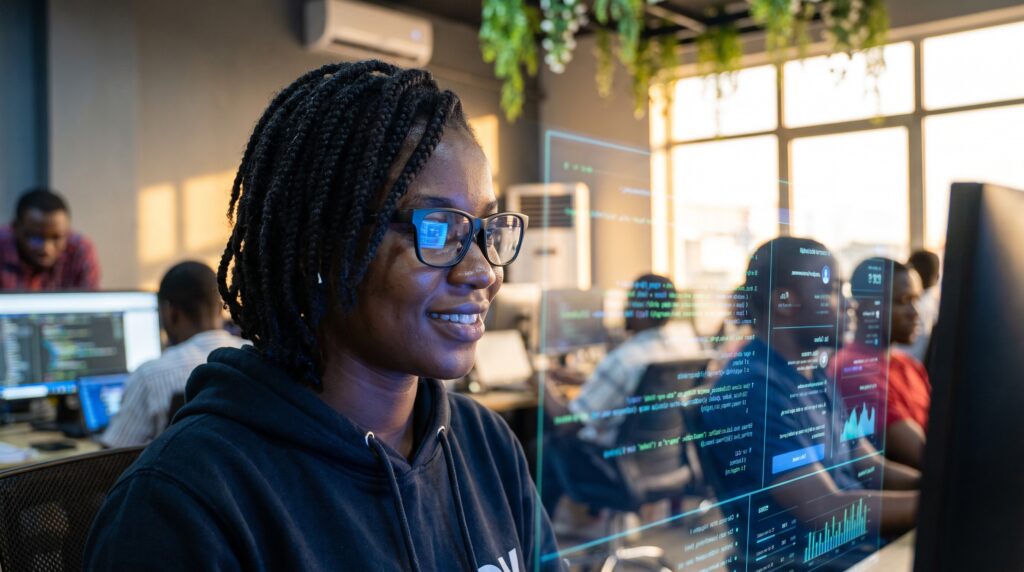
For years, the story of African tech was told in fragments. A startup here, a funding round there. But something bigger has been happening across the continent, quietly and then all at once. Cities are building entire ecosystems: talent pipelines, accelerators, regulatory frameworks, and the kind of deal flow that makes global investors pay attention. These are not just cities with good ideas. They are cities actively competing for a seat at the world’s technology table. Here are seven of them. 7. Kigali, Rwanda Rwanda’s story is almost counterintuitive. A landlocked country of roughly 14 million people, with no coastline and no oil, is building what may be Africa’s most deliberately engineered tech ecosystem. The government decided that knowledge and technology would be the economy. So it built the infrastructure to match that decision. At the center of this vision is Kigali Innovation City (KIC), a $300 million mixed-use smart city development spanning 61 hectares in a Special Economic Zone. Groundbreaking happened in September 2024. The project is a joint venture between pan-African infrastructure investment firm Africa50 and the Rwanda Development Board, and it is designed to house universities, research centers, office spaces, startup incubators, and residential units in a single ecosystem. Carnegie Mellon University Africa and the African Leadership University are already operating within KIC. The University of Rwanda’s Centre of Biomedical Engineering and eHealth is under development there too. The projected outcomes are ambitious: 50,000 new jobs, $150 million in annual ICT exports, and a steady pipeline of over 2,600 tech graduates per year. Rwanda already has 95 percent 4G coverage across the country, with 5G coming. The government offers entrepreneur visas, free co-working spaces, and a policy environment deliberately designed to attract founders from across the continent. The main challenge right now is talent retention. Kigali graduates a lot of engineers, and some of the best ones leave for Nairobi’s higher salaries. But Rwanda is betting that as the ecosystem matures and wages rise, that dynamic will reverse. It is a bet worth watching. 6. Accra, Ghana Accra has quietly become one of West Africa’s most consequential tech cities, and 2024 made that case impossible to ignore. Ghanaian startups raised $450 million that year, a 65 percent jump from the previous year, according to stats and market insights data. The country’s startup ecosystem grew nearly 95 percent in total investment in a single year, bringing its estimated market value to $2.6 billion. Those are not small-market numbers. The city’s tech community is supported by more than 120 hubs, incubators, and accelerators spread across Ghana, with the highest concentration in Accra. MEST Africa, a Pan-African accelerator and seed fund headquartered in Accra, has supported dozens of tech companies. Impact Hub Accra, part of a global social innovation network, and the government-backed Ghana Innovation Hub are among the other key institutions. What really put Accra on the global tech map, though, was Google. In 2018, the company chose the city as the home of its first AI research center on the African continent. Google AI Ghana has since become a symbol of the kind of institutional vote of confidence that changes a city’s trajectory. Microsoft, IBM, and Meta have all followed with programs and partnerships of their own. Then, in late 2025, Ghana signed a $1 billion deal with the UAE to build Africa’s largest AI and innovation hub in Ningo-Prampram in the Greater Accra Region. The UAE will finance and oversee the development, with approximately $400 million going directly into AI infrastructure, including a $180 million AI Compute Hub powered by renewable energy. A further $75 million will fund a Ghana-UAE AI and Web3 campus supported by the Dubai Future Foundation. For a city that has spent years quietly building momentum, that is a very loud arrival. 5. Cairo, Egypt Cairo operates at a scale that most African tech cities cannot match. With a metropolitan population of over 20 million people and a youth bulge that has produced one of the region’s most technically literate workforces, the city has the raw material for a serious tech hub. The question has always been about structure and capital. That has been changing rapidly. The foundational institution in Cairo’s startup ecosystem is Flat6Labs, launched in 2011 by Sawari Ventures and now one of the most active accelerators on the continent, having invested over $85 million across more than 2,000 entrepreneurs. From its early cycles came companies like Instabug, a mobile app debugging platform used by Samsung, PayPal, Lyft, and Airbnb, and Moneyfellows, a digital take on traditional money-saving circles that raised $31 million in Series B funding. Algebra Ventures, Sawari Ventures, and Disruptech have also been active investors in the ecosystem. Egypt’s first unicorn, Fawry, a digital payments platform, reached a billion-dollar valuation and listed on the Egyptian Stock Exchange. Swvl, a mass transit technology company, was the first Egyptian startup to list on the Nasdaq, doing so in March 2022 through a SPAC deal. MNT-Halan, a fintech company serving underbanked populations, is the country’s most recent unicorn addition. Egypt’s tech sector grew 16.3 percent in 2022/2023, making it the country’s fastest-growing sector for the fifth consecutive year. Cairo is not just building startups. It is building a track record. 4. Cape Town, South Africa Cape Town has carved out a very specific identity in the African tech landscape: Africa’s fintech capital. According to the 2023 Disrupt Africa Fintech Report, 45 percent of all South African fintech startups are headquartered in the city. That concentration is not an accident. It is the result of decades of financial services expertise, a regulatory environment that has been more willing to engage with innovation than most, and a talent pipeline that the Western Cape alone accounts for over 35 percent of South Africa’s IT graduates annually. The companies that have emerged from Cape Town tell the story clearly. Yoco, which provides card payment infrastructure for small businesses, has processed billions of rands in transactions and expanded across Southern Africa. Jumo, a fintech platform
10 African Space Milestones Most People Don’t Know Exist

For a long time, the world looked at Africa as a convenient location to point telescopes and set up tracking stations. Clear skies, minimal light pollution, and strategic geography made the continent useful. But something shifted. Quietly and deliberately, Africa started building, launching, and owning its own piece of the cosmos. Today, the continent has national space agencies in over 20 countries, satellites in orbit, and a brand new continental space institution. Here are 10 milestones that tell that full story. 10. NASA Sets Up Shop in South Africa (1961) Long before South Africa built its own telescopes, it was hosting someone else’s. In 1961, NASA established a tracking station at Hartebeesthoek, a farm roughly 60 km west of Johannesburg, with a 26-metre dish used to communicate with early American space probes heading to the Moon and beyond. When NASA handed the facility over to South Africa in 1975, South African scientists took over operations. It became the Hartebeesthoek Radio Astronomy Observatory (HartRAO) and is now part of the global VLBI network. What started as a foreign outpost became a world-class African institution. That transition says everything. 9. NileSat 101: Africa’s First Satellite (1998) On April 28, 1998, Egypt launched NileSat 101 into a geostationary orbit, making Africa a satellite-owning continent for the first time. Launched aboard an Ariane 4 rocket from French Guiana, the satellite was built by European manufacturer Matra Marconi Space but owned and operated by Egypt. Its primary purpose was to broadcast television and provide telecoms services across North Africa and the Arab world. It was a commercial play, not a vanity project, and it worked. NileSat has since grown into a constellation. The same Egypt that hosted Africa’s first satellite in 1998 now hosts the headquarters of the African Space Agency. 8. SUNSAT-1: Africa Builds Its Own Satellite (1999) Less than a year after NileSat, South Africa launched something arguably more significant. SUNSAT-1, launched on February 23, 1999 aboard a Delta II rocket, was designed and built by students and staff at Stellenbosch University. At 65 kg, the microsatellite was capable of Earth observation and amateur radio communication. It was the first satellite on the continent that Africa actually made. Stellenbosch did not have NASA’s budget. They had engineering talent, institutional commitment, and a very specific goal. The satellite worked. It proved that Africa could build for space, not just buy access to it. 7. NigeriaSat-1: Sub-Saharan Africa Enters Orbit (2003) On September 27, 2003, Nigeria launched NigeriaSat-1 from Russia’s Plesetsk Cosmodrome, becoming the first sub-Saharan African nation to put an operational Earth-observation satellite in orbit. The 100 kg satellite joined the international Disaster Monitoring Constellation, a network shared with the UK, China, Algeria, Turkey, Thailand, and Vietnam. What made this launch particularly important was the knowledge-transfer component: six Nigerian engineers were trained at Surrey Satellite Technology Ltd in the UK to design, assemble, and test the spacecraft themselves. Nigeria was not outsourcing the knowledge. It was absorbing it. 6. GhanaSat-1: West Africa Launches from the International Space Station (2017) In July 2017, Ghana became West Africa’s first nation to place a satellite in orbit. GhanaSat-1, a 1 kg nanosatellite developed by students at All Nations University in Koforidua, was deployed from the International Space Station through JAXA’s small satellite orbital deployer. It weighed almost nothing. Its symbolism weighed a great deal. A developing nation with no prior space infrastructure designed a working spacecraft and got it into orbit. Ghana joined a growing list of African nations writing their names into the stars, proving that entry into space was no longer reserved for rich superpowers. 5. MeerKAT Rewrites What Africa Can Do in Science (2018) When South Africa’s 64-dish MeerKAT radio telescope was inaugurated in July 2018 in the Karoo desert, the global science press didn’t exactly rush to cover it. Scientists noticed instead. Within its first year of full operation, MeerKAT produced a landmark image of the Milky Way’s centre, revealing giant radio bubbles around our galaxy’s central black hole, evidence of an enormous ancient eruption. The discovery was published in Nature. The telescope, designed and built by South African engineers at SARAO, went on to win the Royal Astronomical Society’s 2023 Group Achievement Award. It is currently being incorporated into the Square Kilometre Array, the most powerful radio telescope project in history. 4. Rwanda Launches Its Space Agency (2020) In January 2020, Rwanda, a landlocked country with a landmass of just 26,000 square kilometres, launched a national space agency. The Rwanda Space Agency (RSA) is one of the youngest in Africa, but its focus is sharply practical: using satellite data for agriculture, land management, disaster response, and connectivity. Rwanda’s model is notable for what it isn’t. It is not chasing prestige or trying to launch rockets. It is treating space as infrastructure for solving real national problems. Several other smaller African nations are watching Rwanda’s approach closely. 3. Kenya’s Taifa-1: Africa’s First Engineer-Designed Satellite (2023) On April 14, 2023, after three weather-related delays, a SpaceX Falcon 9 rocket carried Kenya’s Taifa-1 into orbit from Vandenberg Space Force Base in California. “Taifa” means “nation” in Swahili. The 3U CubeSat was designed by nine Kenyan engineers and manufactured with assistance from Bulgarian aerospace company EnduroSat at a total cost of roughly 50 million Kenyan shillings (about $372,000). What set it apart is that the mission design was entirely Kenyan: monitor agricultural land, track wildfires, support disaster management. African engineers defining what their satellite should do, because they understood the problems on the ground better than anyone else. 2. The Square Kilometre Array Breaks Ground in South Africa (2022) In December 2022, construction officially began on the Square Kilometre Array Observatory (SKAO) in South Africa’s Karoo region. When its 197 dish antennas (SKA-Mid) are complete, it will be the most powerful radio telescope ever built, with imaging resolution roughly 50 times sharper than the Hubble Space Telescope. South Africa was selected as the preferred host site back in 2012, after a nine-year scientific evaluation process.
The World Comes to Lagos: AFRIMA 2026 and the Coronation of African Sound

The narrative has shifted. For decades, African artists traveled West to seek validation. This week, the West—and indeed the world—traveled to Lagos. As the 9th All Africa Music Awards (AFRIMA) kicked off its main festivities this week, the sheer scale of the convergence highlighted a definitive reality: African music is no longer a “genre” to be exported; it is the global standard to be consulted. Over the last seven days, Lagos has transformed into the undisputed capital of global sound. Official figures released yesterday confirm that 1,216 artistes, delegates, and production heavyweights have touched down in the city, marking the largest creative migration in the event’s history. From the British Deputy High Commissioner to major streaming executives, the eyes of the world are fixed on the Ikeja City Mall and the custom-built AFRIMA dome, not just for entertainment, but for the business of the future. Beyond the Beats: A Summit of Power While the headlines will inevitably focus on the titan-level clash for “Artiste of the Year” between Burna Boy, Davido, and Amapiano king DJ Maphorisa, the real story lies in the ecosystem being built behind the scenes. This isn’t just an award show; it is a trade summit. The Africa Music Business Summit, held this past Thursday, moved the conversation from “streams” to “structures.” We are seeing a pivot from pure talent to technical excellence. The presence of 183 top-tier technical production professionals among the delegates signals that Africa is insourcing the high-end production values that used to require London or Los Angeles. “The turnout shows the growing strength of African music,” noted Mike Dada, AFRIMA’s President, at the Welcome Soirée. But it’s more than strength—it is leverage. The UK government’s vocal commitment to “partnerships that bring mutual economic development” during the event underscores that African creativity is now a diplomatic and economic heavyweight. The Amapiano vs. Afrobeats Synthesis Musically, this week has showcased the “Innovation” at the heart of our new era. The rigid lines between Nigerian Afrobeats and South African Amapiano have dissolved. The “AFRIMA Music Village” performances Friday night displayed a new, hybrid sound—a pan-African fusion that is dominating charts from Tokyo to Toronto. We are seeing artists like Tyla (riding high on her 2025 successes) and rising stars from Francophone Africa seamlessly blending these rhythms. This sonic unity is projecting a front of excellence that is impossible for the global market to ignore. Why This Matters for Africa The grandeur of AFRIMA 2026 is a critical indicator of three things: 1. Cultural Sovereignty: We are hosting our own coronation. By consolidating the celebration of African excellence on African soil, we reclaim the agency to define greatness. We are no longer waiting for a Grammy category; we are building our own ecosystem of prestige. 2. The Creative Economy as an Engine: The influx of over 1,000 international delegates is a direct injection into the local economy—hotels, logistics, security, and tourism. It proves that the “Orange Economy” is a viable alternative to resource extraction for GDP growth. 3. Soft Power Diplomacy: When the world dances to African rhythms, they listen to African voices. This cultural dominance provides a platform to reshape political and social narratives about the continent, moving us from a place of “potential” to a place of “power.” As the main ceremony approaches this Sunday, one thing is clear: Africa is not next. Africa is now.
The Sky is No Longer the Limit: Africa’s Space Ecosystem Goes Operational
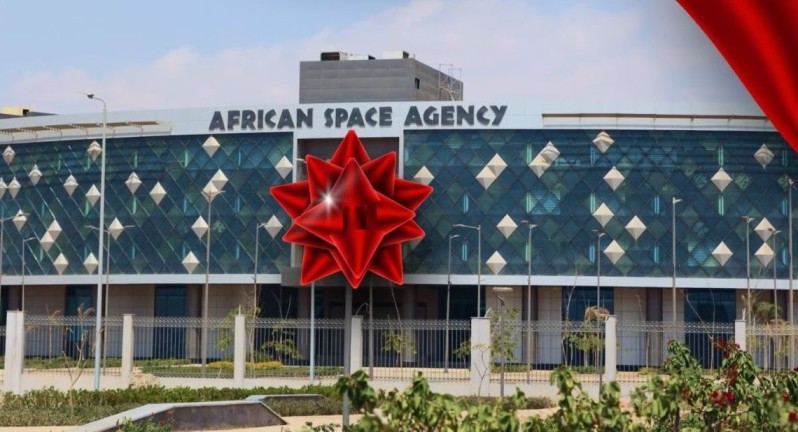
For decades, Africa was the world’s preferred vantage point for astronomy, a continent of dark skies used by foreign telescopes to study the universe. But this week, the dynamic shifted irrevocably. The observer has become the operator. In a landmark series of events over the last seven days, the African space sector has transitioned from ambitious policy to concrete infrastructure, headlined by Senegal’s groundbreaking entry into astronomical research and the operational maturation of the African Space Agency (AfSA). From Dakar to Cairo: A Week of “Firsts” The biggest story of the week comes from West Africa. On Tuesday, Senegal officially commenced construction of the Astronomical Observatory of Senegal (OAS). Set to be the first facility of its kind in the region, the OAS represents a massive leap for indigenous space science. No longer will West African scientists need to travel to Europe or South Africa to access high-level optical data; they are building the capacity at home. Simultaneously, reports confirmed that Egypt’s SPNEX satellite, launched late last month, has successfully completed its “first light” calibration this week. The satellite is now beaming critical climate and agricultural data directly to the Egyptian Space Agency’s control centers. This is not just a technical win; it is an economic one. The data derived here will directly inform irrigation strategies for the Nile Delta, proving that African space tech is fundamentally about survival and sustainability. Adding to the momentum, the Square Kilometre Array (SKA-Mid) in South Africa—the world’s largest radio telescope project—announced it has recorded “first fringes” using its new 15-meter dishes. This technical milestone means the telescope is now successfully combining signals, effectively functioning as a single, giant eye on the cosmos. The African Space Agency (AfSA) Takes the Wheel Underpinning these national wins is the continental glue of the African Space Agency (AfSA). Now fully operational from its Cairo headquarters, AfSA released its 2026 strategic roadmap this week. The agency is no longer just a concept on paper; it is actively coordinating the “African Outer Space Programme,” ensuring that the benefits of these technologies—from disaster management in Mozambique to crop monitoring in Kenya—are shared across borders. Why This Matters for Africa The surge in space activity is often dismissed by critics as a luxury. This week’s developments prove otherwise. 1. Data Sovereignty: Until recently, African nations paid millions to foreign companies for satellite imagery of their own territories. With assets like SPNEX and the new ground stations in Rwanda and Nigeria, Africa is regaining ownership of its own data. We are moving from being customers of the space economy to being competitive producers.7 2. Climate Resilience: The OAS and SKA are not just looking at stars; they are refining the technology we need to monitor our changing planet. African scientists are now at the forefront of generating the climate models that will dictate global policy, rather than just receiving reports from the Global North. 3. The “Brain Gain”: Projects like the Senegalese observatory are magnets for talent. They reverse the brain drain by giving Africa’s brightest physicists and engineers world-class facilities to staff, right here on the continent. This week, Africa didn’t just look up; it reached out and took its place among the stars.
Global Wallet, Local Reach: Nomba Integrates Apple Pay Across 300,000 Terminals

Lagos, Nigeria — In a move that seamlessly bridges the gap between global finance and local commerce, Nigerian fintech innovator Nomba has announced the integration of Apple Pay across its network of over 300,000 Point of Sale (POS) terminals. The rollout, confirmed this past Friday, comes just in time for the peak of “Detty December,” transforming how international visitors and the diaspora transact in Africa’s largest economy. Frictionless Commerce at Scale For years, the narrative of African payments has been one of fragmentation—multiple apps, USSD codes, and a heavy reliance on physical cash. Nomba’s latest update shatters this barrier. By enabling Near Field Communication (NFC) capabilities for Apple Pay, the startup effectively allows anyone with an iPhone or Apple Watch to pay for goods and services in Lagos, Abuja, and beyond, exactly as they would in London or New York. This is not a pilot program. The integration is live across Nomba’s massive merchant network, which ranges from high-end restaurants in Victoria Island to everyday retailers in Ikeja. The technology leverages the “Tap to Pay” standard, ensuring transactions are completed in milliseconds with the biometric security of FaceID. “We are not just moving money; we are removing the friction that separates African businesses from the global economy,” a Nomba spokesperson noted during the launch. “When a tourist lands in Lagos, their digital wallet should work as fluently as their passport. Today, we made that a reality.” Innovation Driven by User Behavior The timing of this launch displays strategic brilliance. December in Nigeria sees an influx of thousands of returnees and tourists who are accustomed to contactless payments. Previously, these visitors faced the hurdle of exchanging foreign currency for large bundles of Naira notes or dealing with card compatibility issues. Nomba’s solution bypasses these pain points, directly injecting foreign liquidity into the local ecosystem through digital rails. This move follows a stellar year for the startup, which has aggressively pivoted from being a simple agency banking provider to a comprehensive business banking partner. By adopting global standards like Apple Pay, Nomba is signaling that African fintech is no longer playing catch-up; it is operating at the frontier of global interoperability. Why This Matters for Africa Nomba’s integration of Apple Pay is a watershed moment for three key reasons: As we begin 2026, Nomba has laid down a marker: The future of African commerce is not just digital; it is borderless.
Cultural Equity: Davido and Carter Efe Shatter Records with Global Streaming Milestone

LAGOS, Nigeria — In a week defined by the festive pulse of “Detty December,” African music has achieved a new benchmark in digital dominance. Nigerian superstar Davido, in collaboration with content creator and artist Carter Efe, has shattered regional streaming records following an explosive live-stream event that has officially positioned them at the summit of the global creator economy. The milestone, confirmed late this week, saw the duo attract a record-breaking concurrent viewership on Twitch and TikTok, surpassing previous continental peaks held by both musical artists and gaming influencers. This “Davido Effect” has not only translated into social media vanity metrics but has triggered a massive surge in catalog streams, with Davido’s latest project 5ive reclaiming top spots on global charts across the UK, US, and West Africa. Innovation through Accessibility The brilliance of this moment lies in its departure from traditional media rollouts. Instead of a standard press junket or a high-priced stadium exclusive, the “Davido x Carter Efe” event utilized the raw, unscripted energy of live-streaming. This approach allowed fans a “fly-on-the-wall” perspective of the megastar’s lifestyle and creative process, humanizing a global icon while utilizing the algorithmic power of secondary creator platforms. Industry analysts note that this wasn’t just a casual “hangout.” It was a meticulously executed masterclass in brand synergy. By tapping into Carter Efe’s hyper-engaged youth audience, Davido bypassed traditional gatekeepers, proving that the future of African music promotion is decentralized and community-driven. This strategy has directly contributed to Davido reaching a historic career milestone of 150 major awards—cementing his status as one of the most decorated African artists in history. Excellence in Execution Beyond the numbers, the production quality of the stream—utilizing high-definition mobile rigs and real-time audio mixing—demonstrated that African creators are no longer just “participating” in global digital trends; they are setting the technical standard. The event successfully bridged the gap between Afrobeats’ sonic excellence and the burgeoning African tech-creator space, showing a unified front of cultural and technological progress. Why This Matters for Africa This record-breaking week is a signal flare for the continent’s creative future: In 2026, the message is clear: the “African Giant” is not just a song title; it is the current reality of the global entertainment industry.
Africa’s Tech Renaissance: The $3.2 Billion Pivot to “Real Economy” Innovation

For years, the narrative of African technology has been dominated by a single vertical: Fintech. The story was always about how we move money. But this week, a new chapter was written—one that is less about transaction fees and more about transformation. Data released this Wednesday reveals that African startups defied global economic headwinds to raise $3.2 billion in 2025, a robust 40% increase from the previous year. Yet, the headline isn’t just the money; it is the destination. For the first time, the center of gravity has shifted from purely financial apps to “Real Economy” solutions—Clean Energy, AI-driven Healthcare, and Electric Mobility. This is not just a rebound; it is a maturation. It is the moment African tech moved from “unicorn hunting” to nation-building. The New Heavyweights: Power Over Payments The report, released by Africa: The Big Deal, highlights a tectonic shift. While fintech remains a pillar, the mega-rounds of 2025 were defined by Energy and Mobility. Leading the charge is Spiro, the electric vehicle company that has become a pan-African symbol of green mobility. Their massive expansion, alongside solar giants like Sun King and M-KOPA, drove Kenya to dethrone Nigeria as the continent’s top investment destination for the first time in a decade. Kenya attracted nearly $1 billion ($933.6m), largely because Nairobi has positioned itself as the global capital of Climate Tech. This pivot is significant. Investors are no longer just betting on user acquisition numbers; they are backing infrastructure that powers homes and vehicles. It is a transition from digital valuation to tangible value. Beyond the Big Checks: AI with a Conscience While the energy giants secured the bulk of the capital, the last seven days have also illuminated the brilliance of Africa’s deep-tech innovators. Consider Signvrse, a Kenyan startup currently making waves for its deployment of AI avatars to translate speech into sign language, bridging a critical communication gap for the deaf community. Or NovFeed in Tanzania, which is using biotech to turn organic waste into high-protein fish feed, solving food security issues at the source. These ventures represent the “Excellence” in our editorial mission. They are not copy-paste versions of Silicon Valley ideas; they are bespoke solutions engineered for African realities. Why This Matters for Africa The implications of this week’s news extend far beyond the boardroom. 1. Economic Resilience: The funding rebound proves that African innovation is decoupling from global venture capital sentiment. While Western markets remained cautious, Africa found a way to grow, driven by sectors that are essential, not optional. Energy and transport are non-negotiable needs, making these startups recession-proof. 2. The Green Superpower Narrative: Africa is often portrayed as a victim of climate change. The success of Spiro and the solar sector flips the script, positioning the continent as a global leader in the adoption of green technology. We are not just adapting to the future; in many ways, we are building it faster than the developed world. 3. Solving, Not Just Servicing: The rise of deep tech (AI and Biotech) signals that our ecosystem has the technical depth to tackle complex, scientific challenges. We are moving from a service economy (payments/e-commerce) to a production economy (energy/food security). As we step further into 2026, the message is clear: The African tech story is no longer just about potential. It is about power—literally and metaphorically.